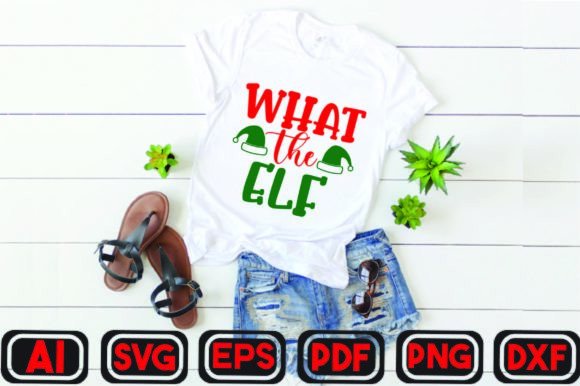
Evaluating What the Elf SVG for Editorial and Website Graphics
When a new graphic design asset lands in my digital library, my first question is always about its editorial potential. Beyond its obvious primary use—in this case, for T-Shirt Designs—I look at its ability to elevate my content publishing workflow. Opening the zip file containing What the Elf SVG, with its bundled EPS, SVG, PDF, DXF, and PNG files, my immediate impression is one of playful seasonal charm. This isn't just a t-shirt graphic; it’s a versatile asset ready to be deployed across a holiday-themed content strategy.
The First Impression: Setting an Editorial Mood
This design asset strikes a balance between whimsical and bold. Its inherent playfulness naturally supports content niches around festive lifestyle, family-centric activities, holiday crafting, and seasonal e-commerce. For a publisher, the mood it creates is one of cheerful invitation. It feels less corporate and more community-oriented, which can significantly affect reader perception. When a visitor sees this graphic integrated into your blog graphics or website header, they immediately understand the content’s tone: lighthearted, celebratory, and engaging. This visual shorthand builds reader trust by signaling a cohesive and intentional design approach.
Beyond the Shirt: Real Publishing Applications
The true value of a multi-format bundle like this lies in its adaptability. In a real publishing day, I might use the high-resolution PNG as a featured image for a blog post about "Unique Christmas Gift Ideas." The scalable SVG can become a decorative accent in a digital guide or worksheet about holiday planning. The clean vectors are perfect for creating a bold Pinterest pin to drive traffic to a seasonal affiliate roundup. Here’s a concrete list of applications in my workflow:
- Blog & Article Graphics: As a dominant visual in a post header or a repeated accent in a listicle.
- Social Media Graphics & Pinterest Pins: Cropped and layered with text for Instagram stories or tall, click-worthy Pinterest images.
- Newsletter Graphics & Banners: Adding visual identity to a December email campaign announcing a holiday sale or content series.
- Downloadable Resources & Lead Magnets: Incorporated into the cover of a “Christmas Activity eBook” or as decoration on a printable holiday planner.
- Website Branding Elements: Used in the hero section of a seasonal landing page or as a category thumbnail for “Holiday Content.”
- Canva Template Enhancement: Imported into a custom template for my team or affiliate marketers to create consistent, branded content quickly.
How This Asset Supports Content Performance
From a digital publisher’s lens, a strong graphic design asset is a performance tool. What the Elf SVG contributes in several key areas:
- Stronger First Impression: It creates immediate category recognition, telling the reader the content is festive before they read a word.
- Clearer Visual Hierarchy: When used as a focal point, it anchors the layout, guiding the eye and making the accompanying headline or call-to-action more prominent.
- Better Click-Through Potential: On social media or in a newsletter, a familiar, well-executed seasonal graphic can feel more inviting and clickable than a plain text block.
- More Consistent Branding: Repeated use across blog graphics, a digital product cover, and social media previews builds a cohesive visual identity for your holiday content.
- More Professional-Looking Pages: Polished, intentional design signals credibility, which is paramount for affiliate marketing pages or content meant to support a small business brand.
Strategic Placement: Where It Works Best and Where to Be Cautious
In my experience, this type of creative design excels in specific editorial contexts. Its bold, decorative nature makes it ideal for hero images, article thumbnails, and Pinterest pins where it needs to capture attention quickly. It works beautifully as an accent in content upgrades like downloadable ornaments or coloring pages. For newsletter headers announcing a festive series, it sets the tone perfectly.
However, use requires careful consideration in other scenarios. On very small mobile thumbnails, intricate details might vanish. Placed on a text-heavy blog image background, it could compete with readability if not managed with proper contrast. It’s naturally less suited for serious professional niches or corporate content marketing that demands a minimal visual system. The key is to treat it as an accent of mood, not a foundational element for a year-round brand.
Practical Publisher Notes for Implementation
Before hitting publish with any new design asset, I run through a standard checklist. For What the Elf SVG, this involves:
- Testing Across Screens: Preview the graphic on desktop and mobile to ensure its impact holds at all sizes, especially as a tiny thumbnail.
- Layout Integration: Drop it into a real blog post mock-up. How does it look beside your standard serif font for body text? Does it clash with a playful script font in a headline?
- Contrast & Readability Check: Try it on both light and dark backgrounds. See how it looks in black and white for potential alternative uses.
- File Performance: For web use, the PNG files should be compressed properly. Large, unoptimized files hurt page load speed, a critical factor for user experience and SEO.
- License Verification: Always confirm the commercial license terms. For use on monetized websites, affiliate pages, or within paid digital guides and lead magnets, you must have clear rights for commercial design application.
The Final Word on Editorial Value
Ultimately, What the Elf SVG is more than a graphic from a creative marketplace. For bloggers, content creators, and digital marketers building seasonal campaigns, it’s a ready-made component for elevating visual communication. It helps transform basic text into polished, engaging content pages. By thoughtfully integrating this asset into blog graphics, editorial design, and web design, you invest in the perceived quality of your entire publishing output. That investment pays dividends in reader trust, click-through rates, and a stronger, more recognizable brand identity for your holiday content niche.