Fueled by Coffee and Music: A Designer’s Review
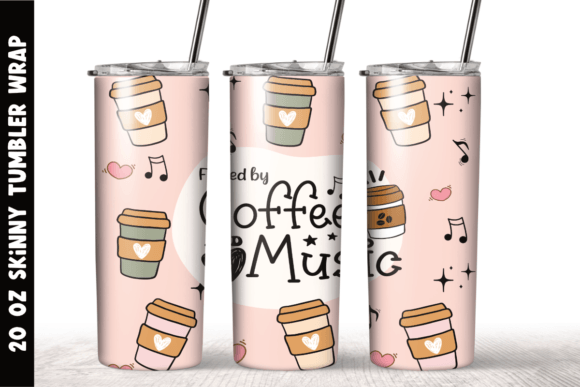
As someone who stitches for clients and my own small shop, I see hundreds of designs. The moment I opened the Fueled by Coffee and Music Tumbler Wrap, I stopped scrolling. This isn’t just another graphic; it’s a ready-made personality packed into a template. At 9.3 x 8.2 inches, it’s a substantial canvas, and the high-res PNG files give me a clear picture of what it could become after stitching.
The First Impression: Mood and Fit
The design has an immediate, relatable energy. The theme speaks directly to a huge audience—the creative, the hustler, the morning-routine warrior. Visually, the layout is balanced, with playful elements that suggest movement and rhythm. This isn’t a stiff, formal graphic; it has a casual, friendly personality that feels perfect for personalized gifts and everyday custom apparel. My first thought wasn’t about a tumbler; it was about how this would look stitched onto the front of a soft, heavyweight sweatshirt or the pocket of a canvas tote bag.
Imagine a client who runs a small creative studio. They want a gift for their team that’s both fun and emblematic of their work culture. An embroidered tote bag with this design, sitting next to their desk, becomes a piece of branded, usable merchandise. That’s the kind of real-life project this embroidery design naturally belongs to.
Where This Design Thrives in Real Projects
Let’s talk application. Because it’s provided as a straight and tapered PNG, it’s incredibly versatile beyond its intended sublimation use. For machine embroidery, this becomes a fantastic reference for creating an applique design or a detailed fill stitch pattern.
I’d confidently use this motif on:
- Sweatshirts & Hoodies: The scale is ideal for a center chest or sleeve placement. The playful theme aligns perfectly with casual wear.
- Tote Bags & Aprons: These are staples for craft businesses and Etsy sellers. The design adds a personalized, professional touch to a functional item.
- Pillow Covers & Kitchen Towels: For home decor or boutique products, it creates a cohesive, themed collection.
- Baby Items & Nursery Decor: For a music-loving parent, a carefully stitched version on a blanket or keepsake would be a cherished gift.
- Caps & Hats: The tapered file hints at curvature, making it a good starting point for adapting to curved surfaces, though careful digitizing would be needed.
The visual appeal here is about recognition and connection. A customer sees it and immediately identifies with the sentiment. That boosts the perceived value of the handmade product and builds engagement. For a small shop owner, using a consistent, high-quality design like this across a product line reinforces brand consistency.
Careful Application: Where to Pay Attention
While the design is energetic, its successful translation into stitching depends on mindful execution. Here’s where an experienced embroidery designer would proceed with caution:
- Small Hoop Sizes: The overall size is large. Reducing it significantly for a small patch could compress the details and lose clarity, especially in any tiny lettering elements.
- Textured or Stretchy Fabrics: Thin knits or highly textured linens might distort the clean lines. Proper stabilizer choice is non-negotiable.
- Dense Stitch Areas: If you digitize this with heavy fill stitches, test the stitch density on scrap fabric first to prevent puckering, particularly on garments.
- Dark Fabric Backgrounds: The original graphic likely has a light background. For dark fabrics, thread color contrast is paramount. You’d need to plan a palette that pops.
- Detailed Corners & Accents: The design’s personality comes from its details. In embroidery, those need to be checked for clarity—will a satin stitch outline hold the shape, or would a running stitch be cleaner?
For products like baby clothes or items needing frequent washing, a robust stitch plan and quality threads are essential to maintain the design’s integrity over time.
The Practical Designer’s Checklist
Before I’d commit this to a client’s project or my shop merchandise, here’s my practical workflow:
- Test on Scrap First: Always. Use the same fabric and stabilizer as the final product to check for puckering, thread coverage, and detail clarity.
- Check Color Contrast: Create mockups—even simple black and white sketches—to see how the elements read on both light and dark backgrounds.
- Review Scale & Hoop: Confirm your machine’s hoop can accommodate the desired size. Don’t assume.
- Inspect Small Details: Zoom in. Are there areas that might become muddy when stitched? Simplify if necessary for cleaner embroidery.
- Confirm Licensing: This is critical for commercial projects. The product is a digital file, but before selling finished embroidered items or derived digital products, verify the license terms for commercial use.
Remember, the provided file is a PNG graphic for sublimation, not a direct embroidery file. Its value for us is as a superb, high-resolution design template. It provides the exact artwork needed to create a stunning embroidered patch, tote bag design, or holiday embroidery gift through our digitizing process.
Final Thoughts: A Trustworthy Design Asset
The Fueled by Coffee and Music Tumbler Wrap stands out as a well-conceived graphic. It feels current, relatable, and full of potential for craft businesses and creative entrepreneurs. Its real value lies in its adaptability. From envisioning it on a custom embroidered apron for a cafe owner to a personalized pillow for a music teacher, it sparks practical project ideas.
For the Etsy seller or small shop owner, using a design with this level of visual personality can elevate a simple product into a story-driven item. It enhances giftability and professionalism in your finished product. Approach it with a designer’s eye for detail, respect the technical requirements of your chosen fabric and machine, and this template can fuel a whole line of products that, much like its theme, resonate deeply with your audience.